Hello, F*cking World

If you work with code long enough, you learn one thing.
The truly terrifying bugs are never in the code. They hide on the first page of the design document, inside an assumption no one thought to question—"this must obviously be true."
If the premise is wrong, it doesn't matter what you build on top of it. The code fails elegantly, and completely.

"We are survival machines, blindly programmed to preserve the selfish molecules known as genes."
Richard Dawkins
This single sentence—unsettlingly assertive—is the premise written on the very first line of mainstream modern science's design document.
A declaration that the human self is an elaborate illusion crafted by genes and neurons, and that the only things that truly exist in the universe are matter and its interactions.
There were those who refused to sign this document.
They rejected the approval, speaking the language of systems theory, emergence, and category errors. The reductionist camp did not stay quiet either. Weinberg, Dennett, and Pinker built three lines of defense and struck back head-on.
The great paradigm of our age, which treats only the measurable as truth. Let's step into the middle of it.
1. What the Critics Actually Said
Courtesy demands we first hear the critics out, all the way through.
In 1972, physicist P.W. Anderson shook the field with a single sentence in "More Is Different."
"The ability to reduce everything to simple fundamental laws does not imply the ability to start from those laws and reconstruct the universe."
P.W. Anderson, "More Is Different"
Being able to take something apart and being able to put it back together are entirely different things.
Even if you take a clock apart down to its individual gears, the laws governing the motion of a gear alone don't explain the fact that "this thing tells time." The function of "measuring time" isn't written on any of the parts. It operates separately, on a layer above.
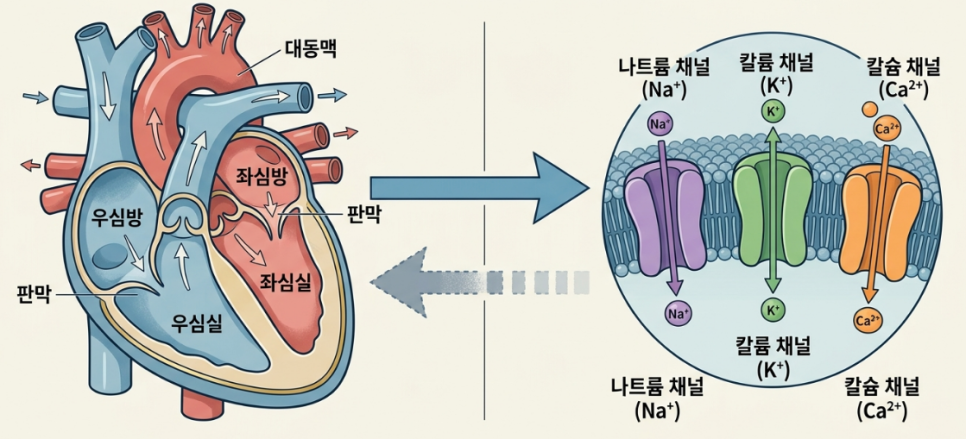
Physiologist Denis Noble takes this a step further. In "The Music of Life," aimed squarely at Dawkins's "The Selfish Gene," he offers his own field of cardiac research as evidence.
The heartbeat cannot be reduced to the behavior of individual ion channels. Its rhythm emerges only within the larger system where cells, tissue, and the nervous system are woven together.
No matter how perfectly you understand the channels, the heartbeat doesn't automatically follow from them. Noble flips Dawkins's bottom-up hierarchy—in which genes build survival machines from below—right on its head.
Biologist Richard Lewontin's critique has a somewhat different flavor. In "The Doctrine of DNA," he points to a trap reductionists frequently fall into.
The act of uncritically elevating a mechanism that operates at the level of the individual to the level of society.
"To confuse individual aggression with the aggression of nations is like confusing the sudden hormonal surge a person feels after being slapped with the political agenda of a nation seeking to control the natural resources, trade routes, commodity prices, and labor supply that cause wars."
Richard Lewontin, "The Doctrine of DNA"
A hormonal surge and a nation's decision to go to war are not events on the same level. There may be an analogy between the two, but there is no causation. Yet reductionists often smoothly bridge the two levels—reasoning that because individuals are aggressive, nations must be aggressive too.
The critique leveled by evolutionary psychologist Gillian Brown and evolutionary biologist Kevin Laland in "Sense and Nonsense" is more methodological.
"Sociobiologists, in their enthusiasm for evolutionary theory, too often skipped from one problem to the next improvising superficial stories, without pausing to develop a solid understanding of the issue, read the social science literature, or consider alternative explanations."
Kevin Laland, "Sense and Nonsense"
This is an academic demand to set stricter standards for testing hypotheses.
As attractive as evolutionary explanations may be, we should ask whether they have genuinely competed against other possible explanations.
Finally, there is the mathematician and philosopher Alfred North Whitehead. Together with Russell, he co-authored "Principia Mathematica" in an attempt to reduce the whole of mathematics to logic—and he watched that attempt run up against its limits more closely than perhaps anyone.
The concept of the "Fallacy of Misplaced Concreteness" that he introduced in "Process and Reality" takes aim at the very core of reductionism.
The error of mistaking an abstract model, introduced for the convenience of measurement, for reality itself. He regarded this as the most fundamental trap of modern science.
If we compress the critiques of these five thinkers into a single sentence, it reads like this:
What can be taken apart and what can be reconstructed are not the same. What is measured and what exists in itself are not the same.
2. The Reductionists' Three Lines of Defense
The reductionist camp did not sit still under these critiques. The defense they mounted breaks down into three main lines.
The first line of defense was drawn by Steven Weinberg.
He argues that "the fact that we cannot yet explain macroscopic phenomena in terms of microscopic laws does not mean some new, independent principle exists there."
We simply lack sufficient computational power, in other words.
His position is that once computers become powerful enough and algorithms sophisticated enough, every macroscopic phenomenon will eventually be reconstructed from microscopic laws.
The second line of defense is Daniel Dennett.
He mocked attempts to invoke macro-level causation as "skyhooks"—hooks dangling from the sky.
There is no such thing as a mysterious force descending from above.
He insisted that every complex structure in the universe must be explained solely by "cranes"—built up, layer by layer, from simple parts at the bottom.
The third line of defense is Steven Pinker.
Rather than responding to Lewontin's critique on academic terms, he attacked Lewontin's political leanings.
"The real reason Lewontin rejects genetic determinism is Marxist bias. Acknowledging biological differences would shake the ideal of an egalitarian society, so he forces himself to reject biology."
This is an attack aimed at the arguer, not the argument.
Put the three lines of defense together, and the reductionist camp's posture becomes clear.
Everything will eventually be reduced to microscopic laws (Weinberg); any other explanation is pseudoscience (Dennett); and those who object to this are, in the end, people captured by ideology (Pinker).
I want to venture an opinion of my own on this.
3. Let's Think Again
3.1 The Self-Driving Car Fallacy
Behind mainstream science's confident conclusion that "the self is an illusion" lies a wealth of powerful empirical data.
A patient with damage to a specific region of the brain can turn into a different person in an instant. Merely fine-tuning neurotransmitters can flip human emotion and reason like the palm of a hand.
"Touch the physical body, and the inner state of consciousness changes"—this causal relationship is so clear that they concluded the material system of the brain is the whole of the self.
When critics counterattacked with "emergence" and "system hierarchy," Weinberg and Dennett struck back like this: "What we can't explain right now is due to our lack of computational power, not because some new principle exists there."
I think there's a trap hidden in this logic. Let's unpack it with an analogy.
Picture a fully self-driving car.
The car is fitted with countless sensors. Weather, road conditions, pedestrians, other vehicles—it senses all of this in real time. The sensors correspond to "the physical body and its neural network."
If dust accumulates on a sensor's surface or noise creeps into a signal, the car drifts off course. Cleaning the sensor and calibrating the signal—that is, methodological reductionism—is absolutely necessary to keep the system running. This is reductionism's legitimate domain, an undeniable tool.
But mainstream reductionists take one more step here. They clean the sensor, and the car runs smoothly again.
Watching this, they draw the following conclusion:
"See—calibrate the sensors properly, and the car's behavior is under complete control. So there is no higher-level goal-setter, no driver, no self of any kind deciding where this car is headed. The electrical signals from the sensors are the whole of this system."
Shouldn't we chew on this leap a little more carefully?
Cleaning the sensor only means that "the subject can once again receive input normally"—it is not proof that no driver exists.
Using the fact that a hardware interface error was fixed as an excuse to delete the entire layer of purpose sitting above it—this is precisely what Whitehead called the "Fallacy of Misplaced Concreteness."
The electrical signal value from a sensor is an abstract representation, set up for convenience, to measure the state of the vehicle. Just because that representation predicts phenomena well doesn't make the representation the whole of reality. Weinberg's "lack of computational power" is an admission of methodological limits, not ontological proof that no further layer exists beyond that methodology.
Dennett's skyhook critique misses in the same way. He declares that "there is no mysterious force descending from above," but what the critics were talking about was never a mysterious force. Anderson's "more is different" isn't magic—it's the observation that once a system crosses a certain threshold of complexity, new regularities emerge.

3.2. The Trap of the "Pure Faction"
The second line of defense the reductionist camp pulled out is even more blatant. Pinker did not respond to Lewontin's scientific critique on academic terms.
Instead, he attacked the fact that Lewontin was a Marxist.
The gist runs something like this.
"The real reason you make that argument is ideology. So your argument isn't worth listening to."
The cleverness of this attack is obvious: it points the blade of criticism at the arguer, not the argument. But that very cleverness becomes its own trap.
In the late Eastern Han dynasty, there was an incident called the "Partisan Prohibitions" (黨錮之禁). Scholar-officials called themselves "the Pure Stream" and branded their opponents "the Turbid Stream," purging them politically under that label.
Here I want to ask a question.
"Who defined them as the Pure Stream?"
None other than the Pure Stream themselves.
This mechanism—monopolizing power by playing referee and player at once—has survived into the modern scientific world in altered form, under the name "scientism."
Of course, the fact that something "was spread through hegemony" is not evidence that "the claim is false." I agree that whether reductionism spread through structures of power and whether reductionism is true or false are separate questions.
But the point where Pinker's rebuttal truly collapses lies elsewhere. He reduces Lewontin's critique to a single phrase: "Marxist bias." But let's reread Lewontin's sentence.
"To confuse individual aggression with national aggression is the same as confusing hormonal secretion with a nation's political agenda."
Where in this sentence is Marx? This is a methodological critique pointing out a confusion of levels.
Regardless of whether Lewontin is a Marxist or not, this critique must be examined on its own terms.
It is, in other words, a "demand to set stricter standards for testing hypotheses."
This is neither a progressive nor a conservative ideology—it's simply the basic posture of scholarship. And yet reductionists often take even this demand as a political attack.
But here a strange irony arises.
The very people who deny the self, insisting humans are nothing but machines leashed to their genes,
run their "self"—their conviction and anger—at full throttle, hotter than anyone, the moment they set out to examine and criticize their opponents' ideas.
Genes do not get angry at someone else's political ideology. Their own fierce academic power struggles, paradoxically, prove the vivid existence of a living self.
Holding hegemony does not make something true. Winning a power game and ontological truth belong to entirely separate domains.
3.3. A Confession of Faith, for Insiders Only
The last card reductionists play is predictive power.
"If the model we broke reality down into is wrong, how can this model cure diseases, build lasers, and launch spacecraft? Success itself proves truth."
Weinberg added one more line to this.
"What we can't explain right now is merely due to a lack of computational power. Someday, once computers advance far enough, everything will be explained by material causation."
The philosopher Karl Popper gave this kind of claim a name: "Promissory Materialism."
There is no cash (evidence) to pay out right now, only an endless issuance of promissory notes claiming future technology will settle everything.
Notes that might well bounce.
And there is a more fundamental problem besides.
Think of Newtonian mechanics. For centuries it was overwhelmingly successful. That success once made Newtonian mechanics seem like the absolute truth of the universe.
But we know better now.
Newtonian mechanics is only a highly useful approximation within certain conditions—it does not describe the ultimate structure of the universe as it is.
Predictive power proves a model's usefulness. It does not prove that the model is the whole of reality.
Elevating a methodological rule—one that the discipline of science set up for the sake of measuring phenomena—into the absolute ontological truth of the universe: this is the fallacy Whitehead spoke of, faced head-on.
Even if physicalists fill a blackboard with complex equations and browbeat us, saying "your values, your anguish, your self are all illusions produced by the survival instinct of genes and the misfirings of brain cells," one fact cannot be hidden.
The very "consciousness," here and now, that reads those equations, pinpoints their contradictions, and writes down its dissent.
This is the most basic data of all, confirmed before any equation.
The reason Descartes said "I think, therefore I am" was not a theological declaration.
It was the sturdiest starting point he could find.
We can "infer" the existence of the Big Bang from the trace of the cosmic microwave background. But we cannot scientifically "define" the singularity that preceded the Big Bang.
Likewise, the origin of the self that emerged as a being thrown into this world remains a reserved domain—one that cannot be fully defined through the lens of reductionism.
And the fact that we do not hold the secret of that origin in our hands gives no one the right to treat the subjectivity breathing here and now as a ghost.
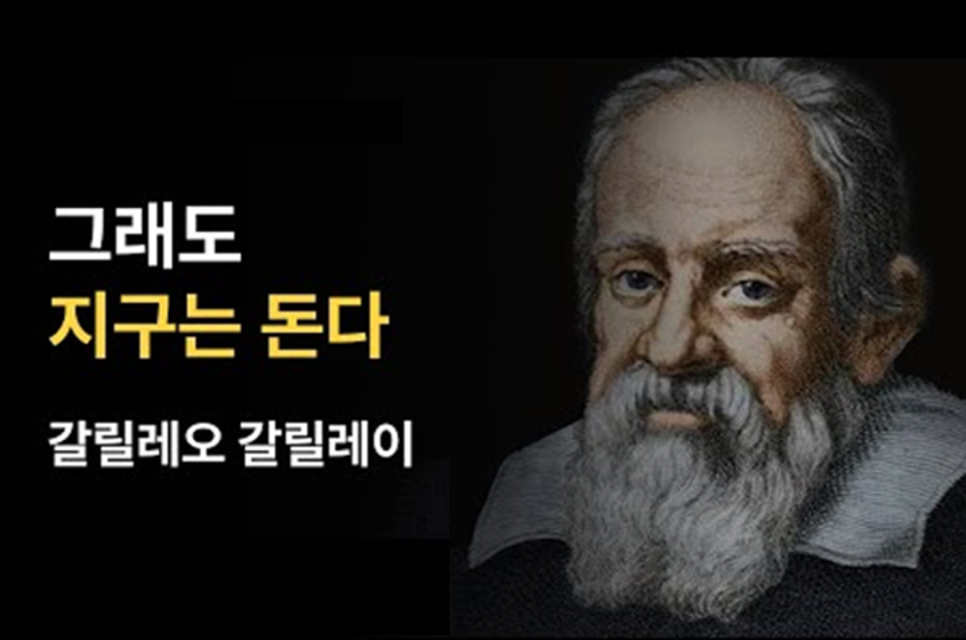
The Inquisition ordered Galileo to deny heliocentrism. But as he walked out of the courtroom, a single sentence is said to have slipped from his lips.
"And yet it moves (E pur si muove)."
Reductionism declares consciousness an illusion.
But consciousness is still here.
Right now, the very subject—consciousness—reading this sentence.
Sources Consulted While Writing This Piece
Academic Papers and Books
- P.W. Anderson, "More is Different," Science 177 (1972)
- Denis Noble, The Music of Life (Yeollin Gwahak, 2008)
- Richard Lewontin, The Doctrine of DNA (Bada Publishing, 2003)
- Gillian Brown & Kevin Laland, Sense and Nonsense: Evolutionary Perspectives on Human Behaviour
- Alfred North Whitehead, Process and Reality
- Karl Popper, writings related to the concept of Promissory Materialism
The Reductionist Camp
- Richard Dawkins, The Selfish Gene
- Steven Weinberg, writings on the reductionist approach in physics
- Daniel Dennett, Darwin's Dangerous Idea (the Skyhook vs. Crane concept)
- Steven Pinker, The Blank Slate
Online Sources
- Namuwiki, entry on "Reductionism"
댓글 0